
Premier League standouts: Bale, Richarlison and Kante drive the latest talking points
A rapid run of fixtures has sharpened the spotlight on form players across the Premier League, from Gareth Bale’s statement display to Richarlison’s decisive streak and N’Golo Kante’s midfield control.
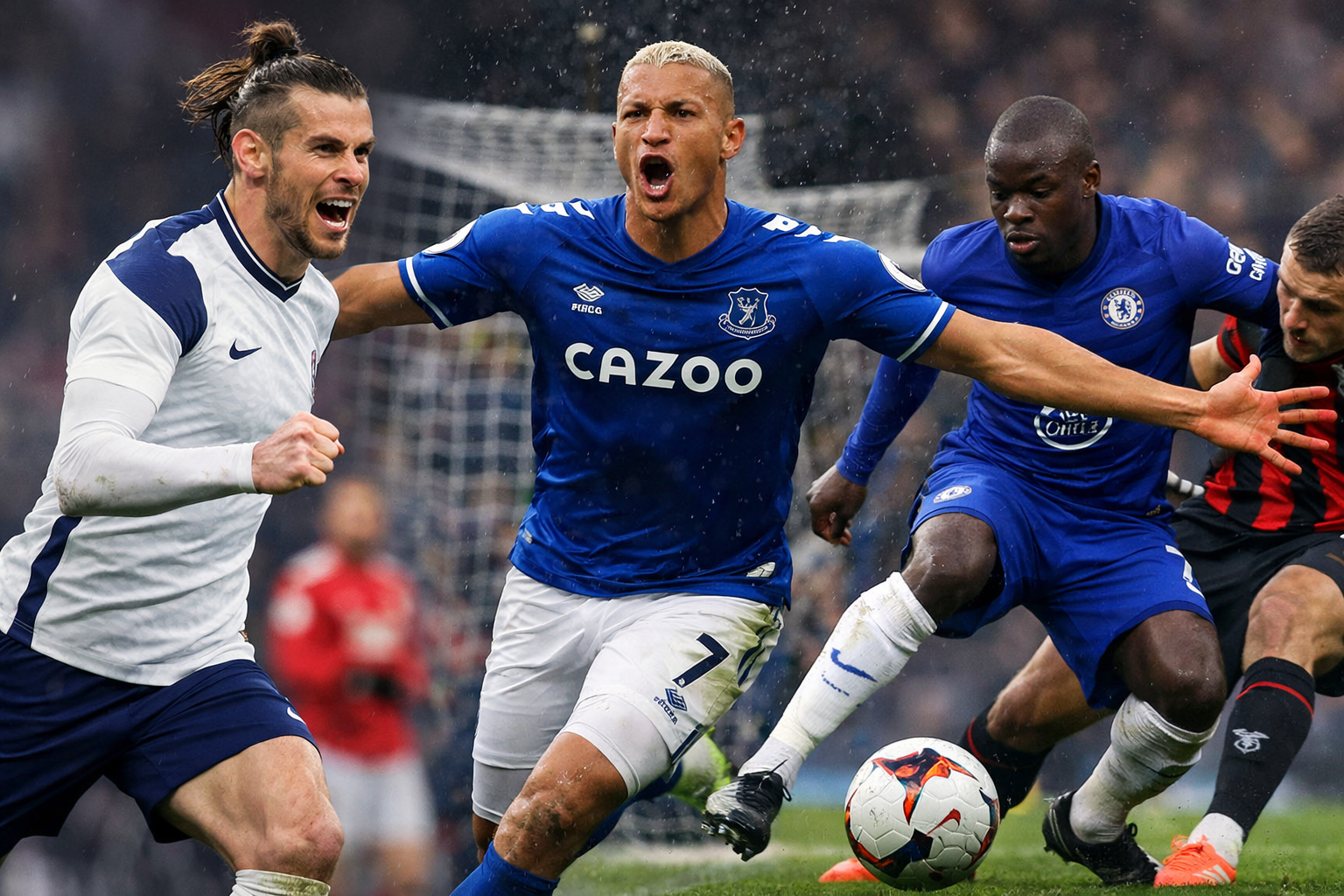
The Premier League calendar has been relentless, and that usually means two things: tired legs and clearer truths. When games stack up this quickly, form becomes impossible to hide. Players either seize the moment or get swallowed by the pace of the schedule.
Across the latest stretch of top-flight action, a handful of names did more than just post good numbers. They shifted matches, changed the feel around their teams, and offered fresh clues about where the season might be heading. Some are rediscovering their best level. Others are forcing their way into bigger roles. A few are simply reminding everyone why elite managers keep trusting them.
Here are five players who stood out most.
Gareth Bale gave Tottenham a glimpse of the original plan
For much of his Tottenham return, Gareth Bale has felt like an idea more than a reality. The reputation was obvious, the moments were sporadic, and the question hanging over the loan was whether Spurs would ever see a version of Bale capable of influencing Premier League matches consistently.
Against Burnley, they did.
In Tottenham’s 4-0 win, Bale scored twice and supplied an assist in his sharpest league display since rejoining the club. More important than the numbers was the way he moved through the game. Starting from the right but constantly drifting inside, he gave Tottenham an extra body in central areas and made Burnley’s midfield line uncomfortable whenever Spurs built attacks at speed.
That movement changed the geometry of the contest. With Heung-min Son and Harry Kane already excellent at dropping into pockets and linking play, Bale’s ability to join them between the lines created overloads Burnley struggled to track. Once Tottenham found rhythm, their front players were combining with a level of variety and ambition that has too often been missing.
The passing stood out as much as the finishing. Spurs’ leading attackers repeatedly found one another with early switches and longer vertical balls into central lanes, stretching Burnley before attacking the spaces that opened up. Bale looked fully aligned with that pattern, not just as a finisher but as a creator.
For Jose Mourinho, this was the strongest evidence yet that Bale could still be a serious weapon rather than a sentimental luxury. For Tottenham, it was a reminder that if he stays healthy and sharp, he changes the ceiling of the attack.
Nicolas Pepe is making Arsenal’s selection calls harder
Arsenal’s front line has changed shape regularly this season, but Nicolas Pepe is putting together the kind of run that demands more stable minutes.
His performance in the 3-1 win at Leicester was one of his most convincing in an Arsenal shirt. Pepe was direct, aggressive and difficult to contain, repeatedly attacking his full-back and forcing Leicester into reactive defending. Luke Thomas never looked fully comfortable against him, took a booking, and was replaced at half-time as Brendan Rodgers searched for a solution.
Pepe’s influence was felt early. He won the free-kick that led to Arsenal’s equaliser, then earned the penalty that put Mikel Arteta’s side ahead. He later finished off a flowing counterattack to cap a display that carried threat in almost every phase.
What made it work was not only individual quality, but the structure around him. Pepe benefited from the support of Cedric behind him, with the full-back’s overlaps helping to stretch Leicester’s defensive line and create the inside lane Pepe likes to attack. When he has that kind of spacing, he becomes far more dangerous because defenders are forced to make a choice: track the runner outside or step toward the dribbler cutting infield.
On this evidence, Pepe is offering exactly what Arsenal need from a wide attacker in transitional moments: ball carrying, foul-winning, and end product. Consistency remains the challenge, but the recent trend is encouraging enough to suggest he deserves a larger role over the closing weeks.
Richarlison is powering Everton’s push
Everton’s season has been slightly overshadowed by some of the league’s louder surprise packages, but Carlo Ancelotti’s team have stayed firmly in the race by doing something every European contender needs to do at some stage: turning tight matches into wins.
Richarlison has been central to that.
The Brazilian has hit a decisive streak, scoring in four straight league games and delivering the winning goal in 1-0 victories over Southampton and West Brom. In a season where margins are often tiny, that kind of reliability is gold.
His role has helped unlock it. Operating from the left side of a front pairing or drifting close to Dominic Calvert-Lewin, Richarlison has been able to attack the channels rather than play with his back to goal for long stretches. That freedom suits him. He can start wide, bend runs into the box, and arrive in scoring zones with more speed and less defensive attention.
Everton’s creators have read those movements well. Whether it is James Rodriguez or Gylfi Sigurdsson working behind the forwards, the first instinct is often to search for Richarlison’s run early. That direct connection has given Everton a cleaner route into the final third and made them more dangerous when opponents leave space between full-back and centre-back.
The broader picture matters too. Everton are no longer simply a side capable of occasional statement wins; they are becoming one that can control the emotional side of a season, handling awkward fixtures with more maturity than in previous campaigns. Richarlison’s current form is a major reason why.
With tougher tests ahead, including matches that will directly affect the European race, his goals may define whether Everton’s strong position becomes something bigger.
N’Golo Kante still sets the standard for midfield disruption
Some performances are loud. Others are built on repeatedly ruining someone else’s plan. N’Golo Kante’s display in Chelsea’s draw with Manchester United belonged firmly in the second category.
The game ended goalless, but Kante’s influence was obvious throughout. Time and again, he stepped in to break up transitions, nick possession away from Bruno Fernandes and cut off the kind of central connections United usually use to accelerate attacks. It was a clinic in anticipation and timing.
He finished with standout defensive numbers, but the bigger point was the control he gave Chelsea in midfield. Under Thomas Tuchel, Chelsea have often leaned on the technical security of Jorginho and Mateo Kovacic, especially with a back three behind them. Kante offers something different. He gives structure through recovery, range and defensive intuition.
That matters in matches where the opposition can break quickly or where individual duels in midfield decide territory. Against United, Kante kept winning those duels without losing discipline. He made tackles, intercepted passes and did it without gifting free-kicks in dangerous areas.
He then backed that up with another excellent showing in the win at Anfield, strengthening the case that he should be a central figure rather than a rotational option.
For Tuchel, Kante is the kind of player who changes how much risk the rest of the side can take. Full-backs can advance with more confidence. The attacking midfielders can press more aggressively. The centre-backs can defend higher up. His value is not only in what he does, but in what he allows everyone else to do.
Marvelous Nakamba is becoming an important Aston Villa solution
Aston Villa’s season has featured bigger headlines elsewhere on the pitch, but Marvelous Nakamba’s recent contribution deserves more attention.
In the 1-0 win at Leeds United, he gave Villa exactly the kind of midfield performance needed against Marcelo Bielsa’s high-energy system. Leeds usually turn matches into open, unstable contests. Nakamba helped prevent that.
His reading of second balls and his positioning in front of the defence were crucial, and his interception numbers reflected how often he arrived in the right space at the right time. More than that, he offered a sturdier base that allowed players ahead of him, particularly John McGinn and Jacob Ramsey, to be more adventurous.
That balance is important for Dean Smith. Villa have more than one type of midfielder, but not all of them provide the same level of defensive bite. Nakamba brings a more combative profile, one that can be especially useful in tougher fixtures or against opponents who attack directly through the middle.
He may not dominate the headlines, yet players like this often shape the outcome of a season’s final third. They stabilise games, protect leads and make life easier for those with more creative responsibilities.
As Villa continue to chase a strong finish, Nakamba is giving them a reliable platform. In a crowded schedule, that has real value.
Form now, consequences later
The most interesting thing about this period of the season is how quickly individual runs of form can alter a team’s trajectory. Bale can change the mood around Tottenham’s attack. Pepe can force Arsenal toward a more settled attacking setup. Richarlison can turn Everton’s ambitions into points. Kante can raise Chelsea’s control level in major fixtures. Nakamba can give Villa greater tactical flexibility.
That is the gift and pressure of this stage of the campaign. Strong performances are no longer just isolated moments; they become evidence. Evidence of trust earned, roles changing, and teams discovering what version of themselves they want to be when the stakes rise.
These five players have all done that in the latest stretch. The next challenge is repeating it when the schedule tightens further and every result starts to carry season-defining weight.