
Mohammed Saeid’s Advice to Young Footballers: Patience, Confidence and Staying True to Your Game
The IK Sirius midfielder’s career across Sweden, England, Denmark and the United States has shaped a simple message for rising players: trust your strengths, handle setbacks and keep working.
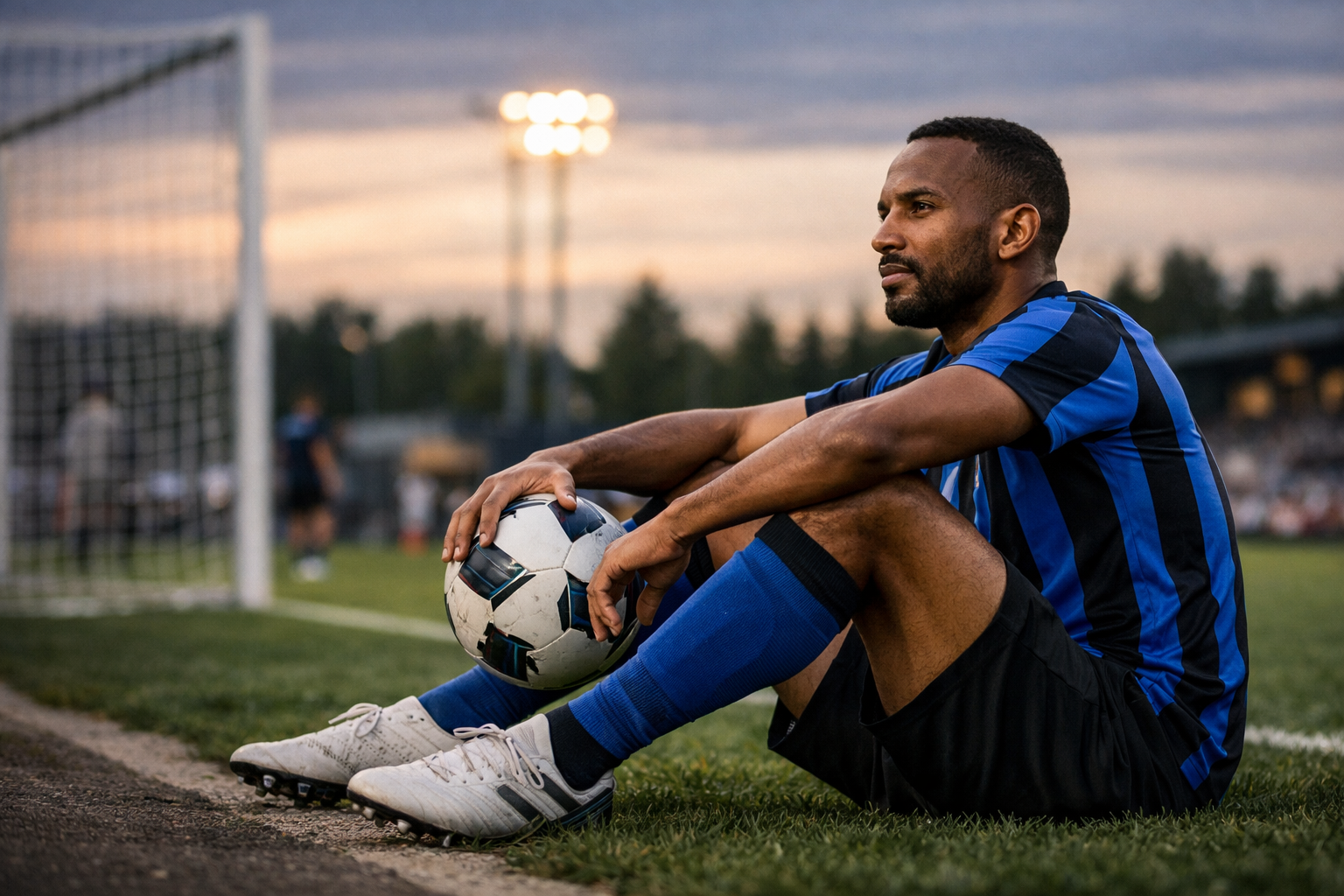
Mohammed Saeid’s journey through professional soccer has taken him from Sweden to England, the United States and Denmark, giving him a broad view of what it really takes to build a career in the game. Now an experienced pro with IK Sirius and an Eritrea international, Saeid believes the most important lessons for young players are often not purely technical.
His message is straightforward: believe in yourself, stay patient and never stop working.
A career shaped by different environments
Saeid’s path has not followed a single, smooth line. He began in Sweden, moved into the academy setup at West Bromwich Albion, spent part of his youth career at Fulham, then returned to Scandinavia while also experiencing Major League Soccer and Danish football along the way.
That mix of cultures, coaching styles and competitive demands has helped shape his outlook. By the time he reached his late 20s, Saeid had seen enough of the professional game to know that talent alone rarely decides who lasts.
Players need technical quality, of course, but they also need the mindset to survive mistakes, setbacks and changing opinions from coaches, clubs and teammates.
Speaking about his development, Saeid stressed that the mental side of soccer is often what separates players who keep progressing from those who stall.
Why the mental side matters so much
According to Saeid, every player will make errors during a match. That part is unavoidable. What matters is the reaction.
A bad pass, a missed shot or a wrong decision does not define a player by itself. The bigger test is whether that player still wants the ball after the mistake, whether he is still willing to make the next run, attempt the next pass or take the next shot.
For Saeid, that is where mentality becomes decisive.
He pointed to elite figures such as Zlatan Ibrahimovic as examples of the mindset required at the top level. In Saeid’s view, what stands out is not only the demands such players place on others, but the standards they set for themselves. That relentless inner drive is what many younger players fail to fully appreciate.
Confidence, then, is not about arrogance. It is about being ready to respond when the game turns against you.
A player who becomes scared after one mistake can quickly disappear from a match. A player who resets and keeps going gives himself a chance to recover and influence the contest again.
The growing importance of sports psychology
Saeid also reflected on something he encountered early in England that made more sense to him later in his career: working with a psychologist.
During his youth years at West Brom, players had access to psychological support. At the time, he did not fully understand why clubs invested in that area. Questions about routines, mistakes, pressure moments and penalty preparation seemed unusual to him then.
With experience, his perspective changed.
He now sees those conversations as part of modern player development, not as an optional extra. Being able to talk openly, reflect on performances and understand emotional responses can help players perform with greater clarity.
That shift says a lot about how the game has evolved. Clubs increasingly recognize that technical drills and gym work are only part of the picture. Managing pressure, building routines and learning how to process disappointment are equally important in a sport where margins are small and scrutiny is constant.
For younger players especially, Saeid’s reflections underline a useful point: asking for help with the mental side of the game should not be seen as weakness. It is part of becoming a more complete professional.
Self-belief has to come first
At the center of Saeid’s advice is one idea above all others: if you do not believe in yourself, nobody else can do that job for you.
He describes self-belief as essential because a football career is full of external judgment. Coaches, scouts, fans and even teammates can all influence how a player feels about his level. If a player’s confidence depends entirely on those outside voices, it can rise and fall too easily.
Saeid’s view is that players have to be both their own harshest critic and their own biggest supporter. They must demand high standards from themselves while still protecting the confidence needed to keep improving.
That message is relevant beyond soccer, but it is especially important in a sport where careers can be shaped by one manager’s opinion, one injury setback or one rough spell of form.
Belief does not guarantee success, but without it, progression becomes much harder.
Work hard, but do not lose your identity
One of Saeid’s more striking points concerns the way young players respond to coaching.
He does not say players should ignore instruction. Improvement requires listening, learning and adapting. But he warns against letting outside voices strip away the qualities that made a player special in the first place.
Using his own experience, Saeid explained that he sometimes listened too closely to coaches who wanted him to play differently. If his natural instinct was to dribble, he was encouraged to simplify and pass more often. Over time, that could blunt the individuality in his game.
The risk, in his view, is obvious. If a player moves too far away from his natural strengths, he can become ordinary. And once that happens, he may no longer stand out.
That is a delicate balance for any young footballer. Development often means polishing weaknesses and improving decision-making, but it should not mean erasing creativity, flair or instinct.
Saeid’s message is to trust your qualities while continuing to refine them. Learn, yes. Adapt, yes. But do not let anyone take away the part of the game that first made you love playing.
Patience is vital in an uneven sport
Another key theme from Saeid is patience.
In youth football, players are often judged too early. Some break through at 17 and are labeled stars. Others develop later and can be overlooked because they are not ahead of their peers at 11, 15 or even 19.
Saeid rejects the idea that everyone must follow the same timeline.
Some players mature physically before others. Some need more experience. Some only start to put everything together in their early 20s, and some later still. In that sense, soccer development is rarely linear.
His advice to younger players is simple: do not panic if your path looks slower than someone else’s. Keep training, keep learning and keep believing that your moment can still come.
That perspective matters in an era when social media can make every young player feel as if they are racing against everyone else. Saeid’s own career, built across several leagues and countries, is proof that there is more than one route to becoming an established professional.
A message that goes beyond football
Although Saeid’s comments are rooted in the realities of professional soccer, the broader lesson extends well beyond the sport.
He emphasizes that dreams require effort, discipline and resilience, whether the goal is in football, school or any other field. Nothing should be taken for granted, and the things within your control should be approached with full commitment.
That mindset is especially valuable for younger athletes who can become consumed by outcomes they do not control, such as selection decisions or public opinion. Saeid’s approach brings the focus back to what matters most: hard work, consistency and a refusal to give up too soon.
Experience behind the advice
What gives Saeid’s words weight is not just the clarity of the message, but the career behind it. He has experienced academy football in England, professional spells in multiple countries and the demands of international duty with Eritrea. He has seen different dressing rooms, different expectations and different stages of the game.
That gives his advice a practical edge.
This is not a theoretical speech about how to make it. It is the perspective of a player who has had to adapt, reflect and keep moving through the many twists of a professional career.
For aspiring footballers, the takeaway is hard to miss. Technical development matters, but mentality may be the piece that carries everything else. Believe in your talent. Accept mistakes as part of the process. Stay open to growth. Protect the strengths that make you unique. And above all, be patient enough to let your path unfold.
In a game that often rushes to label players early, Saeid’s message is a timely reminder that careers are built over years, not moments.