
Chelsea’s sponsor-free shirt is back — and so are the questions around the club’s commercial strategy
Chelsea have begun another season without a front-of-shirt sponsor, turning a branding decision into a wider debate about risk, revenue and how the club is being run off the pitch.
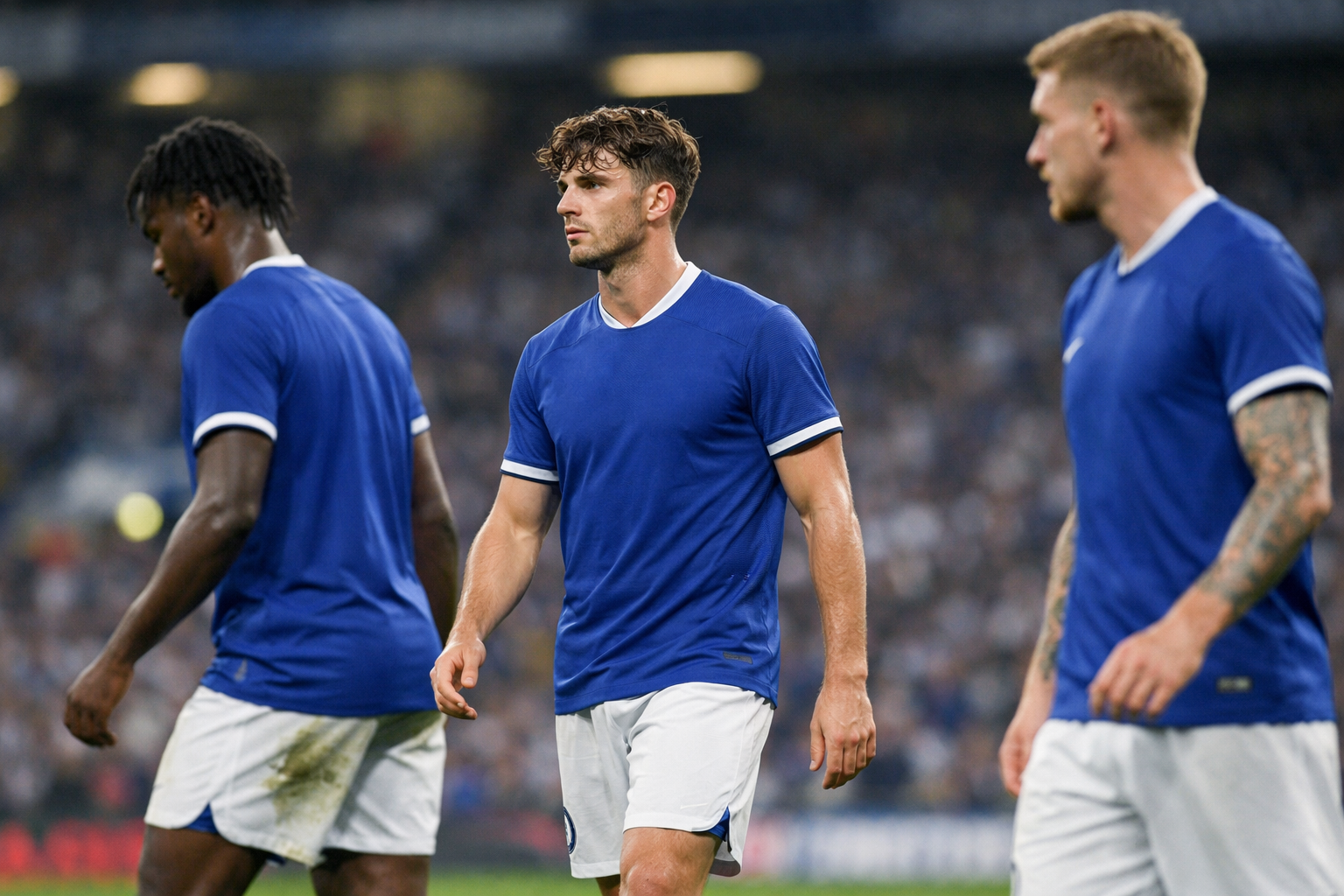
Chelsea’s opening weekend brought a familiar sight: a blue shirt with no brand across the front.
For the second consecutive season, Chelsea have started a campaign without a front-of-shirt sponsor in place. In an era when elite clubs lock in major commercial partnerships years in advance, that absence stands out immediately. It is unusual, conspicuous, and impossible to separate from the wider debate around how the club is being managed under Clearlake Capital and Todd Boehly.
Most of the noise around Chelsea since the 2022 takeover has focused on recruitment, spending, contracts and the shape of the squad. But this latest sponsor gap puts the spotlight somewhere else: the commercial operation, and whether the club’s willingness to gamble extends far beyond the transfer market.
Another season, same blank space
Anyone watching Chelsea’s season opener against Manchester City would have noticed the clean front on the kit. This was not a one-off quirk or delayed launch. It is the second time in two years that Chelsea have gone into a new season without a principal shirt sponsor confirmed for the men’s team.
That matters because front-of-shirt sponsorship remains one of the clearest commercial markers of a club’s market strength. It is premium inventory. For clubs competing at the top of the Premier League and in Europe, these deals are usually among the most valuable in the entire sponsorship portfolio.
Chelsea have not approached it in the standard way.
When the club’s deal with Three expired at the end of the 2022/23 season, the new ownership did not immediately replace it with a conventional long-term agreement. Instead, Chelsea struck a shorter front-of-shirt arrangement with Infinite Athlete.
The broader relationship with Infinite Athlete reportedly stretched beyond one season and across multiple parts of the business, but the front-of-shirt element itself was only agreed as a one-year fix. That was a revealing choice. It suggested Chelsea believed they could improve their market position quickly and command a better long-term number in the near future.
The Champions League bet
The logic behind that approach was fairly easy to read.
Without Champions League football, Chelsea were not in the strongest negotiating position. A club with Chelsea’s scale still carries huge global appeal, but participation in Europe’s top competition changes the commercial conversation. It raises visibility, increases inventory value and gives sponsors a stronger international platform.
Reports suggested Chelsea’s thinking was shaped by exactly that dynamic. Rather than lock themselves into a lower long-term figure while outside the Champions League, they opted for a shorter arrangement, aiming to return to Europe’s elite competition and then renegotiate from a stronger position.
In theory, it was a flexible play. If results improved under Mauricio Pochettino and Champions League qualification followed, Chelsea could re-enter the market with more leverage and pursue a richer, longer agreement.
In practice, it has not landed.
Chelsea did not qualify for the Champions League. Instead, they finished sixth, leaving the club once again short of the premium status they appeared to be banking on. As a result, another season has begun without a permanent front-of-shirt sponsor in place.
That does not automatically make the strategy irrational. It does, however, make it look risky in hindsight.
How much money is actually at stake?
This is where the debate becomes more nuanced.
Chelsea’s one-season shirt deal with Infinite Athlete reportedly brought in around £40 million. That is not a trivial figure, and it places the club in respectable company. It sits below the biggest Premier League commercial giants, with Liverpool reportedly around the £50 million mark and Manchester United around £47 million per season, but it remains competitive relative to several domestic rivals.
At that level, Chelsea were not operating from a position of commercial collapse. The issue is less that the club could not generate meaningful sponsorship revenue, and more that they have not yet converted their scale into the kind of stable, long-range flagship deal usually expected of a club of this size.
Chelsea’s total revenue for 2023 was reported at £512.5 million, up from £481.3 million the year before. So the broader financial picture was not defined solely by the shirt sponsor question. The club remains one of the biggest commercial entities in English football.
Still, the optics matter.
For a club trying to project strategic control, beginning two straight seasons with blank space where a sponsor should be invites scrutiny. It creates the impression of incompleteness, even if executives inside the club would frame it as patience.
Smart leverage or awkward overreach?
There are two obvious ways to read Chelsea’s approach.
The first is that this is a deliberate, modern piece of asset management. Chelsea’s owners have shown repeatedly that they are willing to challenge standard football business practice, whether through long player contracts, aggressive squad investment or creative accounting structures within the rules. From that perspective, refusing to undersell premium sponsorship space could be viewed as a disciplined decision rather than a failure.
Why commit too early if the market may move in your favour? Why lock in a long-term deal at a lower rate if one successful season, one return to the Champions League, or one stronger negotiating cycle could lift the valuation significantly?
That is the bullish reading.
The second interpretation is less flattering. It is that Chelsea overestimated how quickly results would improve, built their commercial planning around an optimistic football outcome, and have now twice been left exposed. On that view, the blank shirt is not a symbol of strategic confidence. It is evidence of a club that keeps assuming tomorrow’s value will exceed today’s without securing enough certainty in the present.
That tension captures much of the Chelsea ownership story so far. The club often appears to be operating on future assumptions: future player development, future resale value, future sporting progress, future commercial upside. Sometimes that is how elite clubs create advantage. Sometimes it just means more volatility.
The branding angle Chelsea cannot ignore
There is also a softer issue here, but not an insignificant one.
A clean shirt can look sharp. Some supporters may even prefer it aesthetically. But from a commercial and reputational standpoint, a missing front-of-shirt sponsor on opening day is unusual enough to become part of the story. It shifts attention away from the football and toward what has not been done yet.
For sponsors, timing matters. Launches matter. Visibility matters. The beginning of a season is one of the highest-attention moments in the football calendar. Failing to arrive there with a marquee partner already activated means losing a natural commercial runway.
Even if Chelsea do announce a new sponsor soon, they have already ceded part of that spotlight.
And because this is now happening for the second year running, it no longer feels like a temporary gap. It feels like a pattern.
What happens next?
Reports have indicated that a new front-of-shirt sponsor is still expected. If Chelsea secure one soon, the immediate issue may fade quickly, especially if the financial terms are strong enough to justify the delay.
That, ultimately, is what this will be judged on.
If the club lands a high-value long-term agreement, executives can argue that patience paid off. The blank shirt will be reframed as a short-term inconvenience in pursuit of a better commercial outcome.
If the eventual deal is underwhelming, or if the delay drags on, the criticism will harden. At that point, the strategy will look less like selective timing and more like a misread of the market.
A small detail that says a lot about Chelsea
A shirt sponsor is not the biggest issue at Chelsea. It will not decide their season, fix tactical problems or settle wider debates about recruitment and structure.
But it is a revealing issue.
It shows a club still trying to maximise upside while living with uncertainty. It reflects an ownership group willing to take unconventional positions. And it underlines the thin line between innovation and overreach in modern football business.
For now, Chelsea’s sponsor-free shirt can be read in two ways: as a premium asset being carefully protected, or as a visible sign that planning has once again failed to align with reality.
The answer, as with so much at Chelsea right now, depends on what comes next.