
Corinne Diacre leaves Marseille after one season despite keeping club in the top flight
Marseille and Corinne Diacre have gone their separate ways after a short spell that ended with survival secured but long-term plans still unresolved.
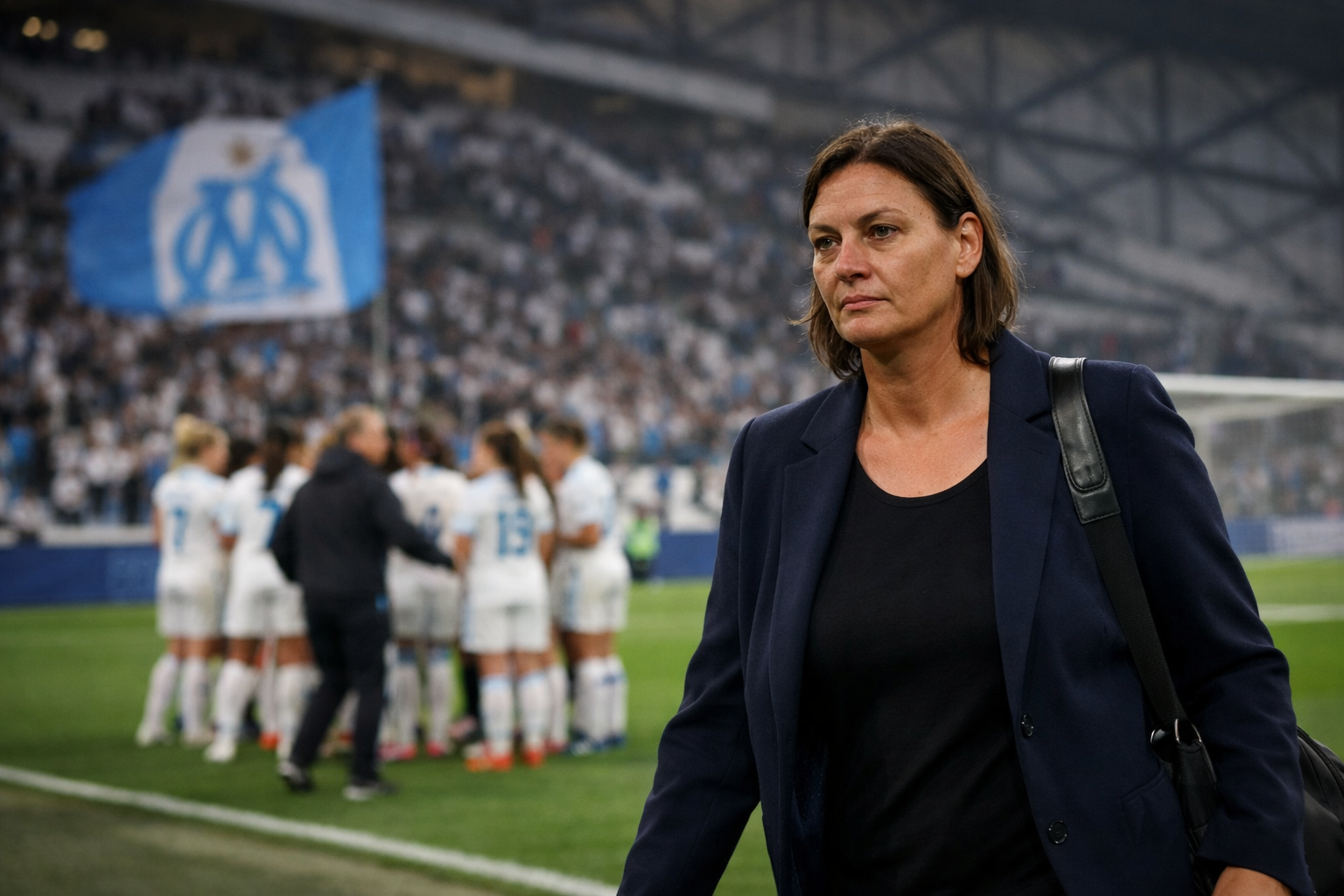
Corinne Diacre’s time at Marseille is over after only eight months, bringing a brief but closely watched spell to an end following the club’s successful fight to stay in the top flight.
Diacre, who arrived last September to lead the Marseillaises, will not continue into next season. Her contract was due to expire at the end of the campaign, and both sides have now opted not to extend the relationship.
The decision is not a major shock. After Marseille’s final game of the season, a 1-0 defeat to Dijon, Diacre strongly hinted that her departure was coming.
It’s the last one, enjoy it.
That line, delivered after the closing match, made it clear that the end was near. Even so, the timing matters because Marseille had already achieved their main objective. Survival had been secured the previous week with a win over Lens, ensuring the promoted side would remain among the elite. They finished ninth with 19 points from 22 matches.
For a newly promoted team, that outcome gave the season a solid foundation. Marseille did enough to avoid an immediate return to the second tier, and Diacre could reasonably argue that the core target had been met.
Survival achieved, but ambitions quickly shifted
What made the split more notable was Diacre’s public stance once safety was confirmed. Rather than framing survival as an endpoint, she used it as a starting point for a broader conversation about the club’s direction.
Speaking after Marseille had secured their status, she made it clear that simply trying to stay up again next season would not be enough.
We cannot be satisfied with staying up every season.
That message carried two layers. The first was sporting ambition. Diacre believed Marseille should look higher after completing the immediate mission of survival. The second was structural. She suggested that reaching that next level would require meaningful changes to the squad.
Her assessment of the group was direct. Much of the team, in her view, was still built on the foundations of last season’s second-division campaign. For Marseille to move beyond survival mode, recruitment and squad development would have to match the club’s ambitions.
In practical terms, Diacre was asking for more than encouragement. She wanted guarantees.
The key issue: backing for next season
According to reporting from La Provence, a meeting with general manager Stefano Petruzzo on Tuesday did not give Diacre the assurances she had hoped for. That appears to have been the decisive moment.
Diacre had already laid out the challenge in public. She said Marseille could not go again with essentially the same squad profile if the aim was to progress.
We will also need guarantees on a different squad because we will not be able to start with this squad, which was mainly a squad made up of D2 players from last season.
That is a blunt description, but it also explains why the relationship reached its limit. Coaches can accept short-term compromises when the target is survival. It is much harder to accept them when the next season is supposed to be more ambitious.
Marseille had shown signs of understanding that issue. Diacre herself said the club was working in that direction, which initially sounded encouraging. But there is a difference between general intent and firm commitment, especially in a summer that is likely to define the next phase of the project.
If the club could not offer clear guarantees on investment, squad planning, or recruitment quality, it is easier to understand why Diacre chose to walk away rather than continue under uncertainty.
A short stay that still carried significance
Diacre’s spell was brief, but it mattered. This was her return to club football prominence two years after her abrupt exit as head coach of France’s women’s national team.
That background ensured her appointment carried more attention than a typical coaching change. Marseille were not only hiring an experienced name. They were bringing in a coach whose career had already moved through some of the biggest pressure points in French football.
Her Marseille stint did not last long enough to become a defining chapter, but it did put her back in the spotlight. She returned, took on the challenge of keeping a promoted side afloat, and completed that basic task.
From that angle, the season can be read in two ways.
- Marseille stayed up, which gives the campaign a positive competitive outcome.
- The club still lost its coach at the end of the year, which points to unresolved questions about planning and ambition.
Both can be true at once.
What this says about Marseille’s project
The departure also raises a wider issue for Marseille. Staying in the division is one challenge. Establishing themselves there is another.
Promoted teams often rely on continuity, collective spirit, and a squad that has already grown together. That can be enough to survive one season. It is not always enough to progress. At some point, clubs have to decide whether they want merely to endure or to build.
Diacre’s comments suggest she wanted Marseille to choose the second path. Her exit implies that, at least for now, there was not enough alignment over how quickly that should happen and what resources would be committed.
That puts the focus squarely on the club’s next move.
The next coach will inherit a team that achieved its minimum target but finished the campaign with a reminder of its limitations. Ninth place and 19 points from 22 games represent a respectable return for a promoted side, yet the closing message from the departing coach was unmistakable: this group, as currently constructed, needs to evolve.
What comes next for Diacre and Marseille
For Diacre, this departure does not necessarily damage her standing. If anything, it reinforces a familiar image: a coach with firm standards, clear views on squad building, and little interest in continuing without sufficient backing.
For Marseille, the challenge is more immediate. The club must now replace a high-profile coach while also answering the same questions she raised.
Those questions are straightforward.
- What level of ambition does Marseille have for next season?
- How much will the squad change during the summer?
- Can the club build on survival, or will it enter another campaign simply trying to scrape through?
The answers will shape far more than the coaching appointment. They will define whether Marseille can turn one year of top-flight survival into something more stable and more competitive.
Diacre’s exit may have been foreshadowed, but it still leaves a meaningful vacuum. She arrived with stature, completed the immediate task, and then decided the conditions were not right to continue. That is a story about one coach leaving, but it is also a story about a club standing at a crossroads.
Marseille have preserved their place in the division. Now they must show what they want that place to mean.