
Michael Carrick addresses Manchester United future after sealing Champions League return
Manchester United’s interim boss says the club is focused on finishing the job after securing a place back in the Champions League, while speculation grows over whether he will stay on permanently.
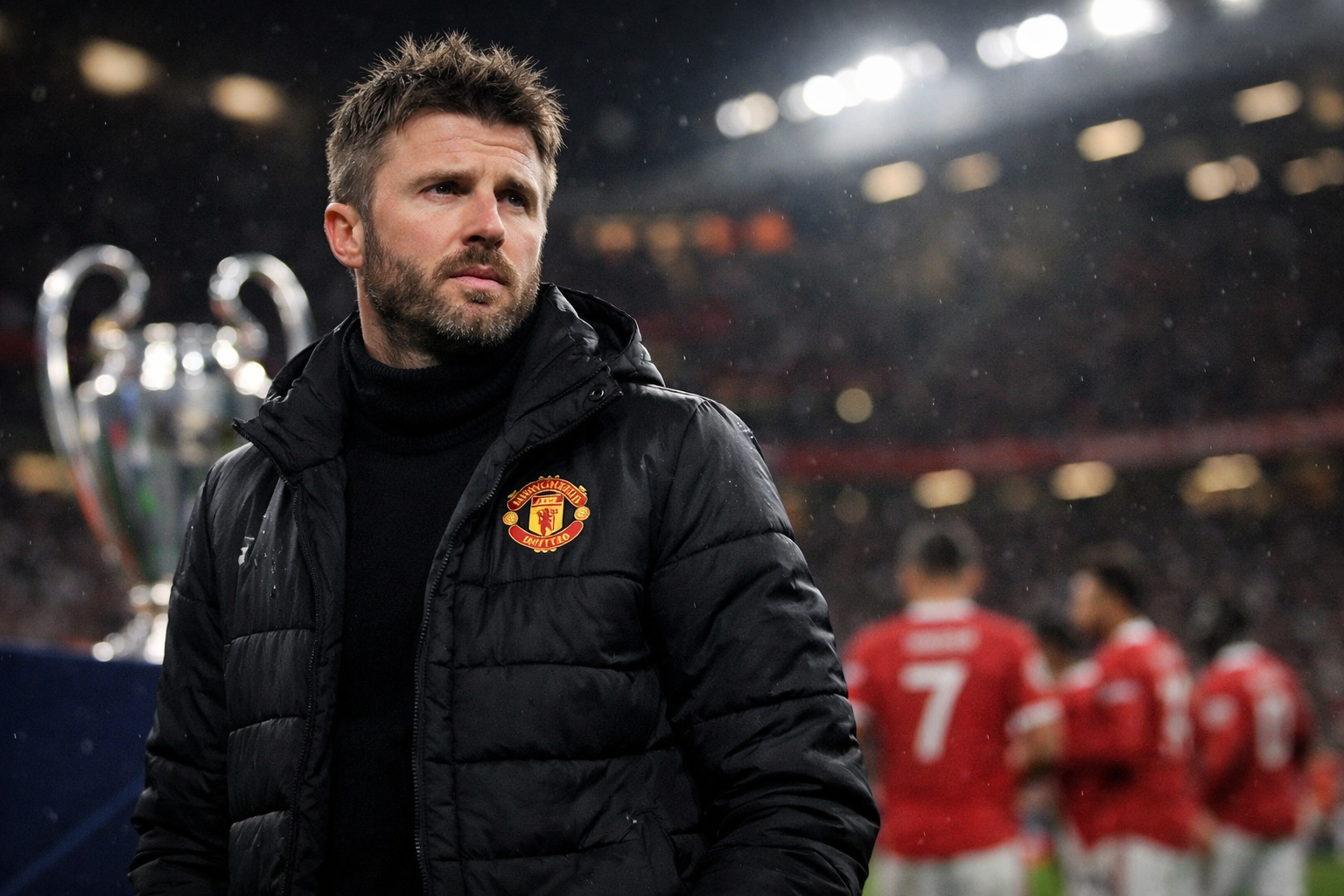
Manchester United’s managerial situation has moved into sharper focus after the club confirmed qualification for next season’s Champions League, with interim head coach Michael Carrick now facing even louder calls to stay in the role permanently.
Speaking after the latest round of speculation, Carrick struck a calm and measured tone. He acknowledged that questions about his future are inevitable given the context, but made it clear he is not letting the noise distract from the immediate task in front of the team.
“I can’t blame you for asking,” Carrick said when pressed on whether he expects to remain in charge beyond the interim spell.
That response was brief, but it said plenty about the current mood around Old Trafford. United have stabilized under Carrick at a critical point in the season, and Champions League qualification has naturally changed the conversation from short-term stewardship to long-term suitability.
Why the conversation has shifted
When an interim appointment is made at a club of Manchester United’s size, the assumption is usually that it buys time. It gives the board breathing room, lowers the emotional temperature, and keeps the season from drifting further off course.
But interim coaches can change the equation if results improve quickly enough. That is the position Carrick now finds himself in.
By guiding United back into Europe’s top competition, he has delivered one of the club’s minimum objectives for the campaign. In practical terms, that matters on several levels.
- It protects revenue linked to Champions League participation.
- It strengthens the club’s appeal to transfer targets in the summer market.
- It provides a more stable platform for squad planning.
- It gives the board a stronger football case for continuity.
Those factors help explain why his name is no longer being discussed only as a caretaker solution. He is now part of the serious debate about what comes next.
Carrick’s message: focus first, decisions later
Carrick did not use the moment to campaign publicly for the job. That is notable in itself.
Rather than turning his press conference into a pitch for permanence, he kept the emphasis on the collective work done so far and the idea that the season still demands full concentration. It is a familiar managerial approach, but in this case it also reflects the balance United are trying to maintain.
The club has achieved something important, but not something final. Qualification for the Champions League is a milestone, not a completed rebuild. Carrick appears keenly aware of that distinction.
His public stance suggests three things.
- He understands the scrutiny attached to the role.
- He does not want future talk to overshadow current performances.
- He is comfortable letting results and internal assessments shape the final decision.
That restraint may actually strengthen his standing. At a club where every comment is magnified, composure is a useful trait.
What Carrick has brought to United
Results are the headline, but they are only part of the case being made in his favour.
Carrick’s value to United has also been tied to familiarity, clarity and a sense of internal reset. As a former player and coach within the club structure, he understands the environment, the expectations and the pressures that come with managing at Old Trafford.
That does not guarantee success, of course. Manchester United’s recent history has shown that familiarity alone is never enough. But in the short term, Carrick appears to have benefited from knowing the dressing room and from simplifying the team’s immediate priorities.
In situations like this, players often respond to clear messages more quickly than to sweeping ideas. An interim coach does not always need to redesign everything. Sometimes the first requirement is to restore order, improve confidence and make the side more coherent from week to week.
United’s climb back into the Champions League places suggests Carrick has managed that phase effectively.
Why the board now has a genuine decision to make
Had United limped to the end of the season without securing a top objective, the search for a permanent manager would likely have felt straightforward. Champions League qualification has complicated that in a productive way.
Now the club must decide whether the interim spell represents a strong finish in unusual circumstances or the beginning of something worth extending.
That is not a small distinction. Big clubs can be tempted by short bursts of momentum, but they also have to judge whether those gains are sustainable over a full season, across multiple competitions and under the pressure of expectation from day one.
The board’s evaluation is likely to include more than the league table.
Key points United will assess
- The consistency of performances, not only the results.
- The dressing-room response to Carrick’s leadership.
- The tactical identity shown during his spell in charge.
- How he handles media pressure and high-stakes fixtures.
- Whether his vision aligns with the club’s summer recruitment plans.
Those are the questions that turn an interim success story into a full-time appointment. The answer will determine whether Carrick is seen as the safe continuation of recent progress or as the manager best equipped to drive the next phase.
The timing matters for United’s summer
One reason this issue cannot drift too long is the transfer window.
Manchester United are heading into a summer that could shape the next few seasons. Recruitment priorities, contract decisions and pre-season planning all become easier if the managerial picture is resolved early.
A permanent appointment gives clarity to players already in the squad and to targets outside the club. It also helps define the type of team United want to become.
If Carrick is retained, the club would be backing continuity and rewarding what he has already delivered. If another candidate is chosen, United would need to move decisively enough to avoid wasting valuable preparation time.
That is why Carrick’s future is more than a media talking point. It is directly connected to football operations.
A bigger opportunity for Carrick
For Carrick personally, this is a significant moment in his managerial career.
Interim roles can be awkward. They offer responsibility without certainty, and success does not always guarantee long-term reward. Yet they also create rare opportunities. A coach who starts as a temporary fix can suddenly find himself one strong run away from one of the biggest jobs in the game.
Carrick has at least played himself into that conversation. That alone is meaningful.
Whether he ultimately gets the role permanently or not, he has shown he can steady a giant club under pressure and navigate a period when the margin for error was slim. That matters for his reputation inside and outside Manchester United.
What happens next
For now, Carrick is saying the right things and keeping attention on the team. That is likely the smartest course while the club weighs its options.
Still, the reality is simple: once Champions League qualification was secured, the questions were never going away.
Manchester United now face a decision that looked far less complicated not long ago. Carrick’s work has changed the mood, improved the team’s position and earned him a serious look.
The next step belongs to the club hierarchy. They must decide whether this has been an impressive interim recovery or evidence that the right permanent manager may already be in the building.
Either way, Carrick has ensured the discussion is now unavoidable, and fully deserved.