Manuel Neuer returns as Germany confirm 2026 World Cup squad
Julian Nagelsmann has brought Manuel Neuer back into the Germany setup for the 2026 World Cup, with the veteran goalkeeper poised to start in North America.
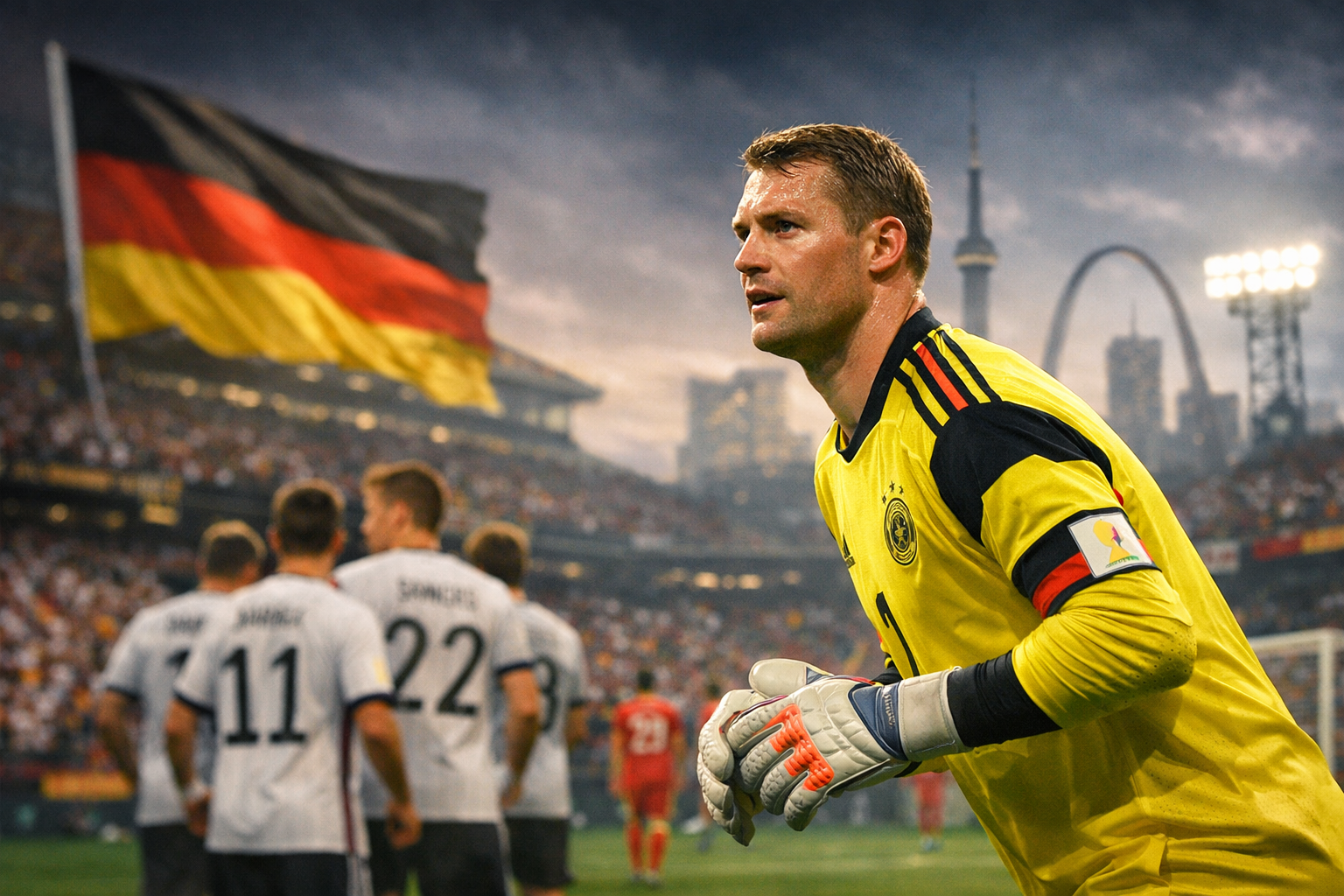
Germany have confirmed their squad for the 2026 World Cup, and the biggest headline is the return of Manuel Neuer.
Julian Nagelsmann's selection was announced on Thursday by the German Football Association, with the 40-year-old goalkeeper back in the national team fold after stepping away from international football two years ago. Neuer is now expected to start for Germany in North America, marking one of the most striking calls of the tournament squad announcements so far.
If he plays, Neuer will appear at a fifth World Cup. His tournament history with Germany stretches back to South Africa in 2010, before he became a central figure in the side that won the 2014 World Cup in Brazil. That experience clearly still carries weight for Nagelsmann as Germany prepare for another major tournament campaign.
Neuer back at the centre of Germany's plans
For Germany, the decision is about more than nostalgia. Neuer's recall gives Nagelsmann a goalkeeper with elite-level tournament experience, leadership authority and long-standing familiarity with the demands of knockout football.
There will naturally be debate over whether Germany should have moved fully into a new era. But in major tournaments, coaches often lean toward certainty in key positions, and few players offer more certainty on the biggest stage than Neuer when fit and available.
Hoffenheim's Oliver Baumann and Bayern Munich goalkeeper Alexander Nubel have been named as the backup options. Bayern youngster Jonas Urbig is the notable goalkeeper omission.
The selection points to a clear hierarchy.
- Manuel Neuer is expected to be Germany's number one
- Oliver Baumann and Alexander Nubel provide experienced depth behind him
- Jonas Urbig misses out despite being part of the wider goalkeeping conversation
Nagelsmann keeps faith with core names
Beyond Neuer's return, Nagelsmann has largely opted for a squad that balances established quality with a few notable selection calls.
Joshua Kimmich is set to captain the side, underlining his status as one of the key reference points in this Germany team. Jamal Musiala is also included despite not having played for Germany since March 2025 after the injury he suffered at the Club World Cup.
Musiala's presence is especially significant. Even if match sharpness becomes part of the discussion, his ability to change games in tight spaces gives Germany a different attacking ceiling. In tournament football, that kind of individual invention can decide group games and knockout ties alike.
One of the more eye-catching younger inclusions is Bayern Munich's 18-year-old Lennart Karl, whose selection suggests Nagelsmann is willing to trust emerging talent in a high-pressure environment.
Mainz midfielder Nadiem Amiri is also in the squad despite only featuring in the first two of Germany's six World Cup qualifiers. That call hints at Nagelsmann placing value on profile and fit, not only qualifying-cycle continuity.
Notable omissions from the final squad
As with every major tournament list, several recognizable names have been left out.
Brentford winger Kevin Schade is not included, while Niclas Fullkrug also misses out after spending the season on loan at AC Milan from West Ham. Inter defender Yann Aurel Bisseck and Borussia Dortmund forward Karim Adeyemi are also absent from the final selection.
Those omissions give the squad a clearer shape. Germany appear to have prioritized tactical balance and reliability over broader depth in certain attacking areas.
The players left out include:
- Kevin Schade
- Niclas Fullkrug
- Yann Aurel Bisseck
- Karim Adeyemi
- Jonas Urbig
Nagelsmann's message before the tournament
After the squad announcement, Nagelsmann made it clear that the mood around the camp is already building ahead of the competition.
“In the past few days I have felt in the conversations with our players how extremely great the anticipation is among each individual for this World Cup.
>
“Everyone is eager to start preparing for the next week. We have a strong squad, of which I am absolutely convinced. With the support of our fans, we want to play a very good World Cup.”
That wording feels important. It suggests a manager focused not just on assembling talent, but on creating conviction around the group before a ball has been kicked. Germany have often looked strongest when there is collective clarity around the squad and its roles.
Germany's group-stage path
Germany have been placed in Group E and will begin their World Cup campaign against Curacao on June 14.
They will then face Ivory Coast and Ecuador in their remaining group matches.
On paper, it is a group Germany will expect to navigate successfully, but the shape of the section offers different kinds of challenges.
- Curacao provide the opening test and the pressure of a must-win start
- Ivory Coast bring athleticism and physical intensity
- Ecuador offer a side capable of making games uncomfortable without much possession
For Nagelsmann, the opening game will matter beyond the result. A convincing start would immediately settle discussion around selection choices, especially the call to reinstall Neuer as first-choice goalkeeper.
Full Germany squad for the 2026 World Cup
Goalkeepers
- Oliver Baumann (Hoffenheim)
- Manuel Neuer (Bayern Munich)
- Alexander Nubel (Bayern Munich)
Defenders and deeper midfield options
- Waldemar Anton (Borussia Dortmund)
- Nathaniel Brown (Eintracht Frankfurt)
- Pascal Gross (Brighton and Hove Albion)
- Joshua Kimmich (Bayern Munich)
- Felix Nmecha (Borussia Dortmund)
- Aleksandar Pavlovic (Bayern Munich)
- David Raum (RB Leipzig)
- Antonio Rudiger (Real Madrid)
- Nico Schlotterbeck (Borussia Dortmund)
- Angelo Stiller (Stuttgart)
- Jonathan Tah (Bayern Munich)
- Malick Thiaw (Newcastle United)
Attack-minded players
- Nadiem Amiri (Mainz)
- Maximilian Beier (Borussia Dortmund)
- Leon Goretzka (Bayern Munich)
- Kai Havertz (Arsenal)
- Lennart Karl (Bayern Munich)
- Jamie Leweling (Stuttgart)
- Jamal Musiala (Bayern Munich)
- Leroy Sane (Galatasaray)
- Deniz Undav (Stuttgart)
- Florian Wirtz (Liverpool)
- Nick Woltemade (Newcastle United)
What stands out in this Germany squad
There are three themes running through Nagelsmann's selection.
First, experience still matters. Neuer's return is the clearest example, but Kimmich, Rudiger, Goretzka and Havertz also give Germany a spine built around players used to elite-level pressure.
Second, Germany have retained high-end technical quality in attacking areas. Musiala and Florian Wirtz remain the standout creative figures, while Sane, Havertz and Undav offer different routes to goal.
Third, there is still room for calculated risk. Karl's inclusion, Amiri's return and the omission of several established alternatives show this is not simply a conservative squad.
That blend may be exactly what Nagelsmann wants. Germany are trying to arrive at this World Cup with enough experience to survive difficult moments, but enough dynamism to look dangerous against the strongest sides.
Neuer's return will dominate the headlines, and understandably so. A 40-year-old goalkeeper coming back from international retirement to lead Germany into another World Cup is a major story on its own. But the bigger question is whether this squad has the balance to make that decision worthwhile.
Nagelsmann clearly believes it does. Germany will now head to North America with a veteran goalkeeper back between the posts, a familiar leader in Kimmich, and a squad carrying both pressure and possibility.