Lokomotive Leipzig’s 1987 European dream still defines a club that refused to disappear
A famous night at Leipzig’s old Zentralstadion remains the emotional high point of Lokomotive Leipzig’s history, but the club’s story did not end with reunification, collapse and reinvention.
For one night in April 1987, Leipzig felt like the center of the football world.
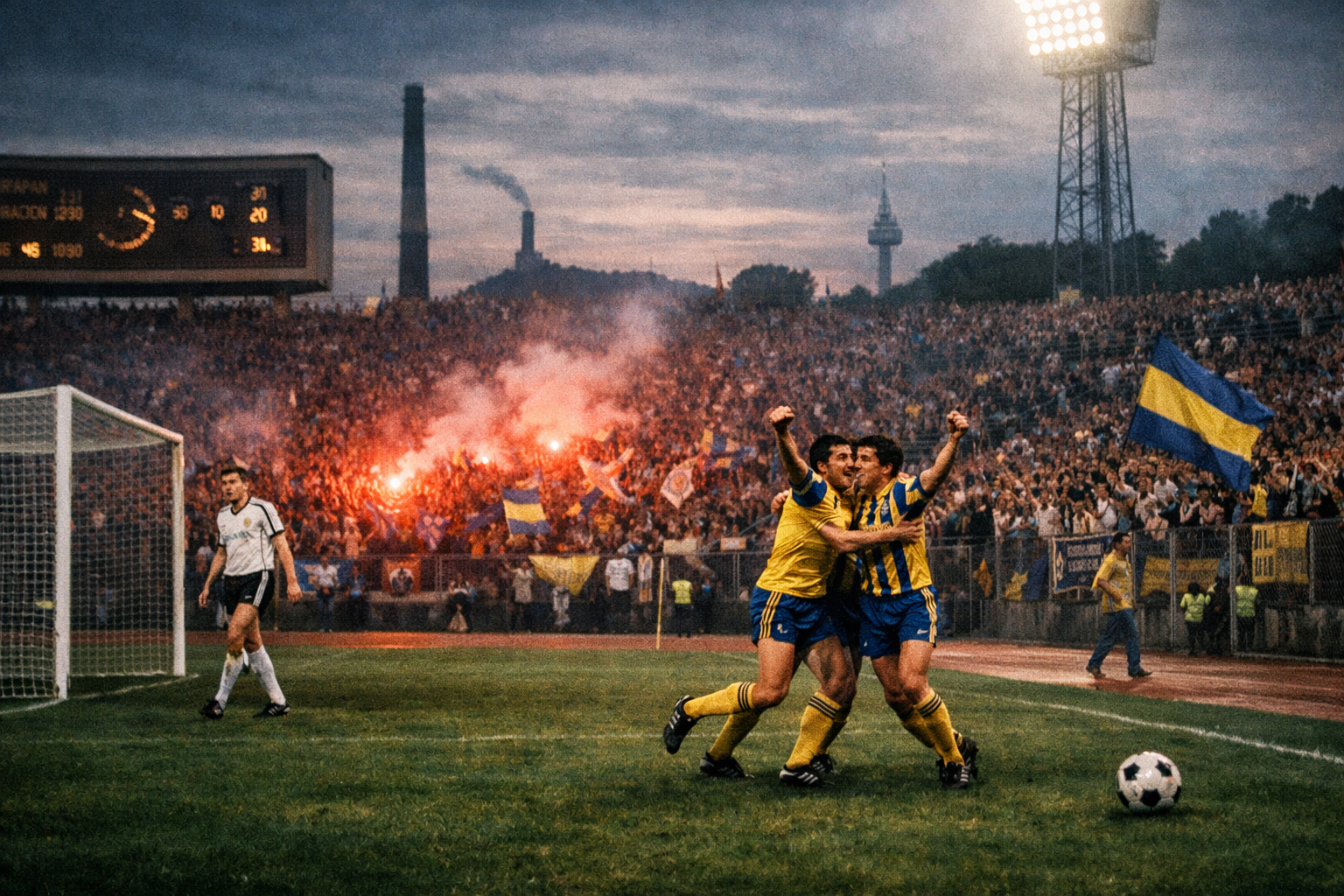
Inside the old Zentralstadion, a vast concrete arena exposed to the wind and built for spectacle, Lokomotive Leipzig stood on the edge of history. Officially, around 74,000 supporters were said to be in attendance for the second leg of the Cup Winners’ Cup semi-final against Bordeaux. Many who were there have long insisted the real figure was much higher. Some later estimates placed the crowd at close to 120,000, a staggering number even for a stadium used to mass events in the German Democratic Republic.
What mattered most was not only the size of the crowd, but what the occasion represented. In the final years of East Germany, football grounds were among the few places where emotion could not be completely managed. Supporters came with loyalty to their clubs first, not to slogans or state choreography. In Leipzig, with blue and yellow scarves packed tightly into the giant bowl of the Zentralstadion, that passion created one of the defining nights in the history of the city’s game.
The night Lokomotive Leipzig reached for Europe
Lokomotive carried a 1-0 advantage into the return leg after winning in France. That left the East German side just 90 minutes from a first European final, but Bordeaux arrived with the quality and calm of an elite Western opponent.
The home side began with intensity, fed by the energy rolling down from the terraces. Bordeaux, though, settled into the game and struck first, leveling the tie and taking command for long periods. Lok still found moments, and late in normal time had a huge chance to settle it, only for Uwe Zotzsche to see his penalty saved by Dominique Dropsy.
Extra time did not separate the teams. Then came the shootout.
René Müller, Leipzig’s goalkeeper, made an important save from Philippe Vercruysse, but Lok immediately missed the chance to seize control when Matthias Liebers was denied. The penalties kept coming. The pressure kept rising. With the score locked at 6-6 in sudden death, Bordeaux’s Zoran Vujović approached the spot knowing any error could end the tie. He hesitated on the run-up, then hit a weak effort that Müller saved.
That opened the door to one of the most memorable images in the club’s history. Müller was not just the hero in goal. He took responsibility for the next kick himself. The goalkeeper stepped forward, smashed the ball into the roof of the net and sent the Zentralstadion into delirium.
Lokomotive Leipzig were through to the 1987 Cup Winners’ Cup final.
A peak before everything changed
The final itself ended in disappointment. Ajax won 1-0 in Athens, with a side loaded with elite talent including Marco van Basten and Frank Rijkaard, while a young Dennis Bergkamp was emerging in the same system. Lok had reached the grand stage, but they could not complete the fairytale.
Even so, the Bordeaux semi-final has endured as something larger than a single result. It stands as a high-water mark not only for the club, but for football in the old GDR.
Within a short time, the political landscape around Leipzig shifted dramatically. Protests that would help reshape East Germany gathered force in the city. The Berlin Wall fell in November 1989. Reunification followed. The structures that had shaped sport, politics and daily life in the East collapsed with astonishing speed.
For clubs such as Lokomotive Leipzig, the transition brought freedom, but also upheaval.
From Lokomotive to VfB and into crisis
Leipzig’s football identity had never been simple. The club traced its roots back to VfB Leipzig, Germany’s first national champions in 1903. After decades of political change and reorganizations, the Lokomotive name had become one of the best known in East German football.
But after reunification, many institutions in the East tried to rebrand themselves for a new era. In 1991, Lokomotive dropped the old name and returned to VfB Leipzig, partly to reconnect with pre-war tradition and partly to shed the associations of the communist period.
For a moment, the move seemed to offer a path upward. VfB Leipzig even reached the Bundesliga in 1993-94. But the economic gap between East and West German football quickly became impossible to ignore. Clubs from the former GDR were thrown into a far more commercial system without the financial foundations needed to compete.
The struggle was severe. Debts mounted. Momentum disappeared. By 2004, the club had gone bankrupt and effectively ceased to exist.
It would have been an understandable ending for a historic side battered by reunification, football economics and years of instability. Instead, Leipzig chose another route.
The fan-led rebirth
Supporters rebuilt Lokomotive Leipzig from the bottom of the pyramid. The club was restarted in the 2004-05 season in the 11th tier of German football, an extraordinary fall for a side that had been one penalty shootout away from European glory less than two decades earlier.
This revival was not symbolic in a vague sense. Fans quite literally helped reconstruct the club’s home, Bruno-Plache Arena, working to make the stadium usable again. It became a hands-on rescue mission driven by loyalty, memory and local pride.
The city responded. Interest in the new Lok remained powerful, even in the lower leagues. One match against Eintracht Großdeuben drew 12,421 spectators, setting a German record for a game at that level. Fittingly, it was staged at the old Zentralstadion, connecting the reborn club to the site of its greatest modern night.
That alone would have made Lokomotive’s story unusual. But the club’s resilience has continued to surface in other ways too.
A club shaped by Leipzig’s contradictions
Leipzig has changed dramatically in the years since reunification. It is now often described as one of Germany’s most dynamic cities, combining redevelopment, tourism and a visible relationship with its East German past. Yet the social tensions that marked parts of the former GDR have not disappeared entirely.
Lokomotive, like several clubs in eastern Germany, has also had to confront darker issues around far-right and hooligan elements. That challenge has tested the club’s identity and public image. In recent years, however, efforts to make Bruno-Plache Arena more welcoming and to push back against those influences have become an important part of the rebuilding process.
On the pitch, progress has been less dramatic than many supporters hoped. Lok have spent years narrowly missing out on a return to higher levels, often stuck in the regional divisions despite strong backing and ambition. Still, there are signs of steadier footing than in the chaotic years after rebirth.
The ‘invisible opponent’ that kept the club alive
Perhaps the best modern example of Lokomotive Leipzig’s unusual bond with its supporters came during the COVID-19 pandemic.
With lower-league football hit hard by empty stadiums, the club searched for a creative way to raise money. Its answer was to sell €1 tickets for a virtual match against an “invisible opponent,” using the campaign to support hundreds of staff and protect the club through the shutdown.
The target was symbolic: surpass the estimated 120,000 attendance from the famous 1987 semi-final against Bordeaux.
They did more than that. Lok sold 150,000 tickets for a game that did not exist in physical form, a remarkable demonstration of the reach and emotional pull the club still holds. It was both fundraiser and statement. Lokomotive Leipzig, despite everything, still mattered deeply to people.
Why the 1987 night still matters
Today, the old Zentralstadion is no longer the home of Lok. A modern stadium rose within the shell of the historic venue and is now associated with RB Leipzig, the corporate-backed club that has come to dominate the city’s top-level football profile.
That reality can make Lokomotive seem like a relic from another age. But that misses the point.
Lok’s significance is not tied only to league position or financial power. It lies in survival, memory and belonging. The 1987 semi-final remains the ultimate expression of that identity: a packed stadium, a goalkeeper deciding a European tie, and a city discovering what collective belief can sound like.
At Bruno-Plache Arena, supporters still care for the ground in ways that feel almost personal, maintaining and preserving a home that reflects the club’s roots. Even when crowds are reduced or results disappoint, that connection does not fade.
Lokomotive Leipzig may no longer be one of Europe’s headline names. Yet its story remains one of the most compelling in German football: a former finalist from the East, a club swallowed by reunification-era realities, and a community institution rebuilt by its own people.
For many teams, bankruptcy would have been the final chapter. For Lok, it became the start of another one.
And in Leipzig, the echoes of that night against Bordeaux have never really gone away.