
Neuer says Bayern lacked the edge as PSG punished missed moments in semi-final exit
Bayern Munich created enough pressure to keep the tie alive, but Manuel Neuer felt Paris Saint-Germain showed the ruthless streak his side could not match over two legs.
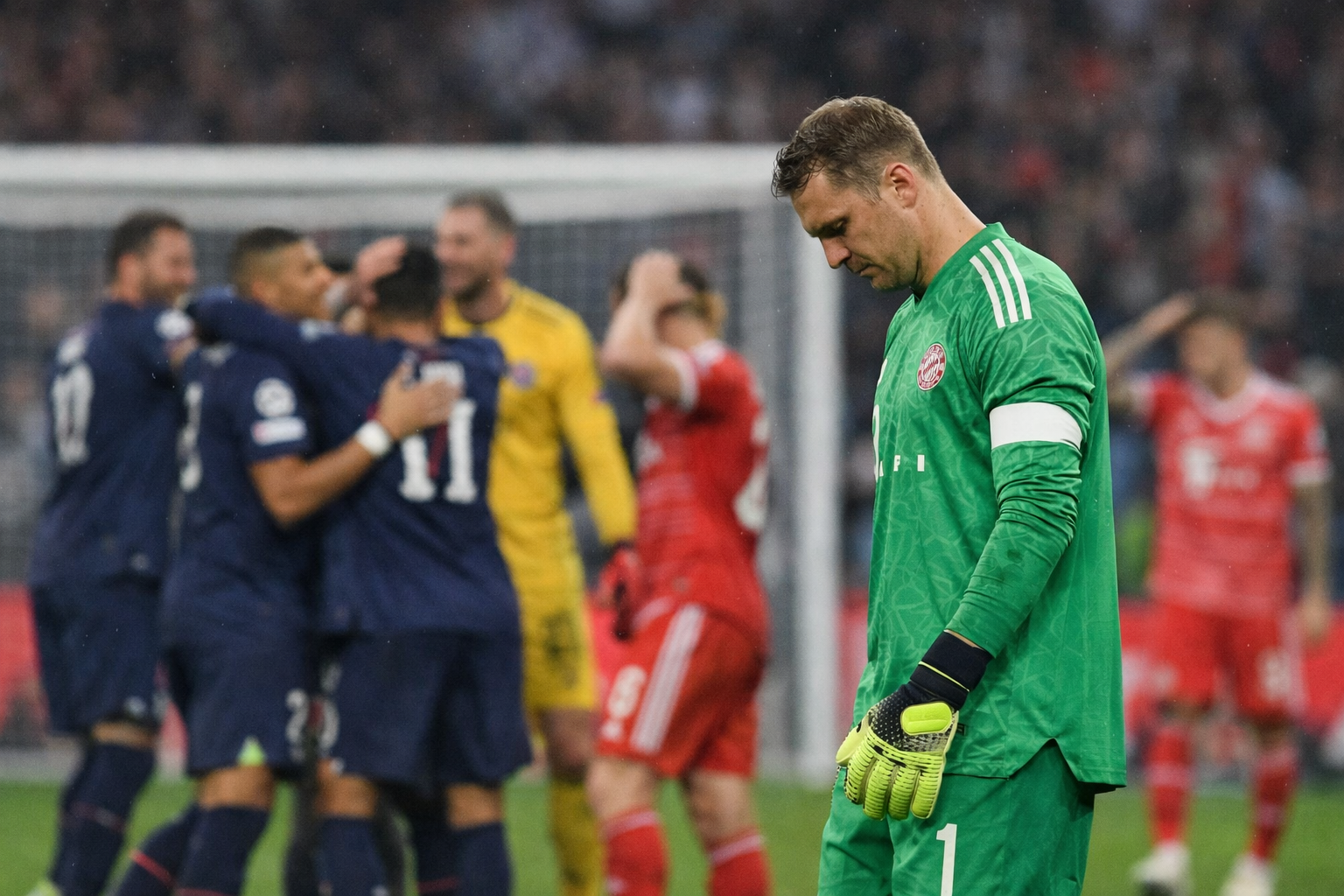
Bayern Munich’s Champions League campaign ended with a familiar feeling for Manuel Neuer: not a collapse, not a tactical no-show, but a night where the margins turned against them because they failed to be ruthless enough.
After a semi-final packed with swings in momentum across both legs, Bayern were knocked out 6-5 on aggregate by Paris Saint-Germain, and Neuer’s verdict was blunt. In his view, the difference was not effort or even territory. It was what top-level knockout football so often comes down to: finishing the moments that matter.
Neuer’s diagnosis: Bayern were not clinical enough
Speaking after the second leg, the Bayern captain pointed to one quality he felt separated the two teams over the tie.
“We didn’t have the killer instinct in attack today,” Neuer said, reflecting on a match that Bayern needed to chase for long spells after conceding early. “But ultimately we did have opportunities to win the game.”
That line gets to the core of Bayern’s frustration. They were not overwhelmed in Munich. They were not cut apart repeatedly. Instead, they were left to regret the moments they could not convert, especially in a game where PSG struck first and then managed the situation with growing control.
Ousmane Dembele’s early goal put Bayern behind on the night and increased the pressure immediately. From there, the hosts pushed, probed and accumulated attempts, but their only reward came deep into stoppage time when Harry Kane finally found the net. By then, the damage was done.
Kane’s goal narrowed the scoreline, but not in any meaningful way. Bayern had spent too much of the tie playing catch-up, and too many of their openings had gone unfinished.
A tie of extremes
What made this semi-final especially striking was how different the two legs looked.
The first meeting in Paris was chaotic, open and brutally efficient. PSG won 5-4 in a game where nearly every major chance seemed to carry a goal threat. The return leg was almost the opposite: tighter, more controlled, and defined by waste rather than constant punishment.
Across the second leg, Bayern took 18 shots to PSG’s 15 and edged the expected-goals battle 1.4 to 1.02. On paper, those numbers suggest a contest Bayern were very much alive in. But football at this stage is rarely decided by volume alone.
There were only two goals from 33 total shots in Munich, a conversion rate of six percent. That stood in sharp contrast to the first leg, which produced nine goals from just 22 attempts. Same tie, totally different texture.
And yet the broader story stayed the same. PSG were more decisive when the opening appeared. Bayern were not.
That is why Neuer’s use of the word “killer” matters. It was not simply frustration. It was a recognition of how elite knockout ties are won. Teams can survive periods without the ball. They can concede territory. What they cannot do is repeatedly leave the door open and expect not to be punished.
Bayern had their chances
This was not a game in which Bayern failed to threaten at all. They had enough moments to believe a comeback was possible.
Jonathan Tah had one of the clearest sights of goal before the break, only to head wide in first-half stoppage time. Luis Diaz, Michael Olise and Jamal Musiala also came close as Bayern tried to build pressure and unsettle PSG’s back line.
But “close” became the theme of the night.
That, perhaps, is what makes the defeat harder to process in Munich. Bayern were near enough to feel the final was still within reach. Neuer said as much, noting that his side were “actually close to reaching the final” but could not complete the job.
In knockout football, closeness counts for little unless it changes the scoreboard.
PSG’s game management told the story
If Bayern’s problem was inefficiency, PSG’s strength was control. After taking the early lead, the French side defended with discipline and maturity, protecting their aggregate advantage without losing sight of the attacking threat that had done so much damage in the first leg.
Bayern defender Jonathan Tah admitted as much afterward, offering a clear-eyed assessment rather than searching for excuses.
“They deserved to go to the final,” he said. “Both games were close. They were different games, so you can’t compare them. They won twice so you have to give it to them.”
That honesty matters. Bayern can point to chances missed and fine margins, but PSG did not stumble into the final. They won the first leg by making almost every big attacking sequence count, then handled the return with enough composure to absorb pressure and keep Bayern at arm’s length.
Tah also highlighted the tactical issue that lingered throughout the second leg: Bayern did not put enough sustained pressure on PSG’s back line.
That sounds simple, but it speaks to a deeper problem. Bayern generated attempts, yes, but not always the kind of relentless, destabilising pressure that bends an elite defence out of shape. PSG were able to defend for long stretches without looking fully disorganised, and that is usually a sign the attacking side is falling just short in the final phase.
The numbers support the feeling
This was one of the highest-scoring Champions League semi-finals across two legs in recent memory. The 11 total goals placed it among the competition’s most explosive last-four ties, even if the second game itself was far less wild than the first.
That overall total can disguise the real lesson, though.
Bayern did enough in both games to stay in the conversation. They were dangerous enough to make PSG work. They won the xG battle in the second leg. They had periods where the tie felt alive. But in decisive moments, PSG were cleaner, sharper and more punishing.
At this level, those differences become defining.
A team can dominate phases and still lose if the opposition are more precise in both boxes. That is effectively what happened here. Bayern’s shot count and underlying numbers offer some comfort, but they do not erase the central fact that PSG handled the key moments better.
What Bayern are left with now
For Bayern, the elimination means the wait for a seventh European Cup goes on. More importantly, it leaves behind a difficult emotional mix: disappointment, yes, but also the sense that the gap was bridgeable.
That can be the toughest type of defeat. A heavy collapse is easier to explain away. A narrow exit built on missed openings lingers longer because players can replay every chance and every nearly moment.
Tah’s reaction reflected that balance. He called the result disappointing, but also insisted Bayern had to live with difficult moments if they want to be successful. It was not the language of a team in denial. It was the language of a team trying to absorb a loss that felt preventable without pretending it was undeserved.
There is a difference.
Bayern were competitive enough to believe. PSG were efficient enough to finish the argument.
The bigger takeaway
Neuer’s comments cut through the noise because they identify a truth that often sits beneath elite European ties. Systems matter. Match plans matter. Momentum matters. But eventually, someone has to take the chance.
Bayern did not do that often enough.
PSG did, especially when the tie was most volatile. That clinical edge gave them the first-leg advantage and the breathing room to manage the second. By the time Kane scored in added time in Munich, the semi-final had already tilted irreversibly toward Paris.
For Bayern, this will feel like an opportunity missed. For PSG, it is another step built on a trait every champion needs: the ability to turn pressure into goals.
And for Neuer, the verdict was simple. Bayern were close, but close is not enough when the other side are killers.